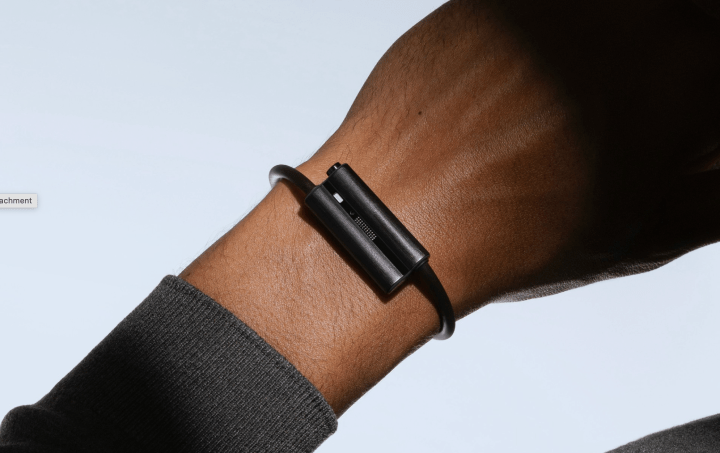
At-home health testing has a troubled reputation, marred by overblown claims and outright fraud. But TimeTeller, a German startup, is taking a different path. The company has developed a saliva test kit designed to help people understand their circadian rhythm — and it is led by CEO Angela Relógio, a physicist-engineer and molecular biologist whose background stands in sharp contrast to the disgraced founder of a notorious blood-testing company.
Relógio spent years researching oncology, circadian biology, and systems medicine in Germany before leaving academia to build TimeTeller. She is notably careful about what the test can and cannot do today.
Why Timing Matters in Cancer Treatment
It would be easy to oversell what TimeTeller offers. Relógio’s last name means “clock” in her native Portuguese, and the startup has the potential to reduce side effects from cancer treatment and improve outcomes by timing treatment to each patient’s internal clock. That potential is exactly why she warns that TimeTeller operates on two timelines.
The long-term goal is to determine when cancer treatments will be better tolerated and most effective — far more granularly than simply labeling someone a morning person or a night owl. But the direct-to-consumer kit won’t help patients figure that out on their own.
“That is something that we need to calculate for every single medicine; we do that in the context of clinical studies,” Relógio cautioned.
Who Is Already Using TimeTeller?
According to Relógio, TimeTeller started accepting direct orders because of demand from longevity clinics. These clinics focus on healthy aging and recognize that individual data on a person’s circadian rhythm can support personalized advice on sleep, nutrition, light exposure, and physical activity.
Beyond aging, TimeTeller could also apply to metabolic diseases such as diabetes and neurodegenerative diseases such as Alzheimer’s, as well as performance and women’s health. But cancer remains its core mission.
The Discovery That Sparked a Company
It was while studying cancer that Relógio made the discovery that led her to leave academia. She noticed that many cancer patients stopped or started their treatment because of side effects.
“As a scientist, that was just impossible to watch, particularly when I was convinced that part of the problem might not only be what treatment we give, but when we give it,” Relógio said.
This insight led her to develop the circadian rhythm test at the core of TimeTeller — a test she knew had to become a company.
“I personally funded our first patent because I strongly believed that this discovery should not remain in scientific publications,” she said.
From Charité to Medical School Hamburg
The startup spun out of Berlin’s Charité university hospital but has since moved to Medical School Hamburg, which provided access to patients and funding. It also offered a fallback: backup employment for TimeTeller’s team of 10 if the company couldn’t pay them.
That’s a safety net TimeTeller may not need. Having enlisted biochemist and market access specialist Benjamin Dose as a co-founder, the startup secured a partnership with Techniker Krankenkasse, one of Germany’s largest health insurance providers.
The partnership started as a reimbursement deal in which the insurer pays back the cost of the test for a subset of cancer patients. Both sides are now ready to expand it to more of the insurer’s 12 million members, Relógio said.
A Future Where “When” Is Central to Precision Medicine
Despite her caveats about the direct-to-consumer test, TimeTeller has become a solution that cancer patients can actually access, she made clear that the company has broader ambitions: a future in which asking “when” is central to precision medicine, because “almost every process in our body is timed.”
What the TimeTeller Circadian Rhythm Test Means for Patients
For now, the practical takeaway is simple. The TimeTeller circadian rhythm test is available directly to consumers, but it is not a tool for self-diagnosing or self-timing cancer treatment. That work happens inside clinical studies, where researchers calculate the right timing for each specific medicine.
What the kit does offer is a window into an individual’s internal clock, which longevity clinics are already using to shape advice on sleep, nutrition, light exposure, and exercise. That alone marks a meaningful shift from generic wellness recommendations to guidance built around a person’s own biology.