

Tesla Cybercab Details: New Info on Child Safety, Brake-By-Wire, and More
Tesla recently held an intimate event to unveil its fully autonomous Cybercab, and the newly released Tesla Cybercab details reveal a vehicle that is starkly different from anything the automaker has produced before. Unlike the company’s typical flashy, livestreamed product launches, this gathering was low-key, with a keynote that lasted only about 15 minutes and, by most accounts, did not feature CEO Elon Musk on stage.
The promise of the Cybercab is massive: a fully autonomous vehicle that relies solely on cameras and AI for navigation, aiming to be a more affordable alternative to Waymo. However, many of the specifics were buried in PDFs released by the company and updated terms of service for its “Robotaxi” app. As Tesla faces scrutiny from the NHTSA regarding the safety of its rollout, here are the most important new Tesla Cybercab details that have emerged.
No Riders Under 13 Allowed
One of the most surprising Tesla Cybercab details is the age restriction for passengers. According to the fine print, Tesla is not allowing minors under the age of 13 to ride in the Cybercab “at this time.” This is a notable deviation from Tesla’s existing “Robotaxi” Model Y SUVs, which allow minors between the ages of 8 and 17. While Tesla provides guidelines for using child seats in both vehicles, the Cybercab lacks the standard LATCH anchors for securing them. Instead, child seats must be attached using the seat belt.
This decision is curious, given CEO Elon Musk’s well-known advocacy for population growth and his focus on reducing vehicle costs by removing unnecessary parts. However, it appears Tesla is exercising caution, requiring all children under 18 to be accompanied by an adult in both vehicles, and specifically hesitating to allow young children in the Cybercab for now.
What Happens in a Crash
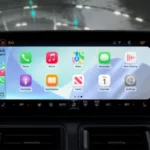
While autonomous vehicles aim to eliminate collisions, they are not immune to them. The Tesla Cybercab details include a specific post-crash sequence designed to maximize safety. When a collision occurs, the airbags will inflate, the doors will unlock, and the hazard and interior lights will activate. The high-voltage battery is disabled, the windows roll down to a “vent” position, and the vehicle applies its brakes to come to a stop and park itself. Crucially, the infotainment system establishes a two-way connection with Tesla’s rider support team.
The automatic unlocking of doors is a significant feature. Tesla has faced criticism for its reliance on electronic door latches in both the U.S. and China. Just last month, the company agreed to recall millions of vehicles in China due to concerns that electronic door latches could trap occupants following a crash, making the Cybercab’s automatic unlock a vital safety update.
Manual Door Releases Made Easy
Another key improvement in the Tesla Cybercab details is the placement of the manual door release. In response to criticism that manual releases are difficult to find in an emergency, the Cybercab features a clearly visible manual release on the armrest of each door. This is a practical design choice for a vehicle that uses electronic latches and automatic doors. The exterior also features a small button that riders can use to open the doors, streamlining the entry and exit process for passengers.
Brake-By-Wire Technology
Tesla Cybercab details also confirm the use of a brake-by-wire system. This technology replaces traditional hydraulic brake fluid with electronic actuators to control brake calipers, reducing manufacturing complexity and cost. Elon Musk noted that “having electric brakes avoids the complexity of a hydraulic system: no need to rout plumbing all around the car.” This follows Tesla’s lead with the Cybertruck, which was the first major automaker to use steer-by-wire, eliminating the physical steering column connection.
Additional Features and Observations
The finer Tesla Cybercab details also include some curious omissions. For example, the windows “cannot be fully opened at this time,” according to documentation, though no explanation is provided. On a positive note, the interior is equipped with USB-C outlets that deliver up to 90W of power, which is roughly four times the output of typical car outlets, allowing for faster charging of laptops and other devices.
The lack of LATCH anchors for child seats also highlights Tesla’s aggressive cost-cutting approach. Executives, including Musk, have frequently discussed removing unnecessary parts to reduce expenses, but few expected the company to eliminate child seat anchors—especially given Musk’s personal interest in population growth. This decision may raise questions among parents and families who might otherwise consider using the autonomous taxi service.
Why These Details Matter
These Tesla Cybercab details come at a critical time. The National Highway Traffic Safety Administration has already opened an investigation into Tesla’s Cybercab rollout, and the company must prove these vehicles are safe to the public, local governments, and federal regulators. The age restrictions, crash protocols, and design choices revealed in these documents provide insight into how Tesla is balancing innovation with safety concerns.
Tesla’s approach to the Cybercab represents a significant shift in automotive design. By eliminating hydraulic systems and physical steering connections, the company is pushing the boundaries of what a vehicle can be. However, these innovations also introduce new challenges, such as ensuring that electronic door latches function reliably in emergencies and that passengers can easily exit the vehicle after a crash.
As Tesla navigates regulatory hurdles and works to prove the safety of its autonomous fleet, these Tesla Cybercab details offer a comprehensive look at the company’s current strategy—balancing cost-cutting with safety, while introducing unique restrictions that set the Cybercab apart from its other vehicles. The ban on young children, the brake-by-wire system, and the enhanced post-crash protocols all reflect Tesla’s efforts to address potential risks while pushing forward with its autonomous vehicle ambitions.
Whether the Cybercab will succeed in becoming a more affordable alternative to Waymo remains to be seen. But one thing is clear: these Tesla Cybercab details show that Tesla is taking a methodical, if sometimes controversial, approach to bringing fully autonomous vehicles to the masses. As more information becomes available and the vehicles hit the road, the public will be watching closely to see if Tesla can deliver on its promises while maintaining the highest safety standards.