Qualcomm backs Ultrahuman in $70M round on bet to turn smart rings into computers
Ultrahuman, the Indian startup known for its popular smart rings, has raised $70 million in a new funding round that includes backing from Qualcomm Ventures. The financing values the Bengaluru-based company at $365 million—roughly triple its $120 million valuation from 2023.
- Qualcomm backs Ultrahuman in $70M round on bet to turn smart rings into computers
- Building the smart ring computer of the future
- Beyond health tracking: games, AI, and more
- The business behind the smart ring computer bet
- From glucose monitors to smart rings
- U.S. market rebound after patent dispute
- Expansion and profitability outlook
- IPO timeline and health partnerships
- What this means for wearable technology
The round features participation from U.S. diagnostics giant Labcorp, Alpha Wave, Blume Ventures, Nexus Venture Partners, and Alteria Capital. It consists of $65 million in primary equity and $5 million in debt, according to founder and CEO Mohit Kumar.
Building the smart ring computer of the future
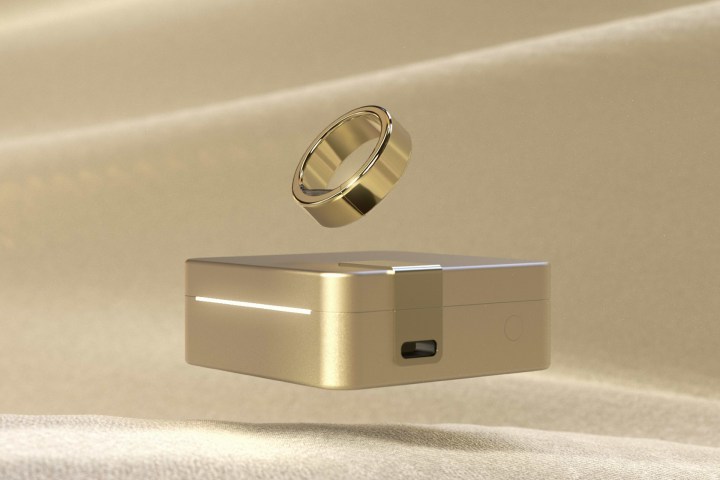
Ultrahuman is working with Qualcomm on a new ring that will use the chipmaker’s silicon. The startup currently uses chips from Nordic Semiconductor in its rings and plans to continue using them alongside Qualcomm’s technology. The added computing power will allow more software and algorithms to run directly on the ring, reducing its reliance on a phone or the cloud.
“All ring devices today are like trackers,” Kumar said. “You put on the ring, it measures your heart rate, your movement, your sleep.” Ultrahuman’s goal is to make the ring more like a smart ring computer, where programs and algorithms can run on the device itself.
This shift could open the ring to use cases well beyond health and sleep tracking—the applications Ultrahuman rings are currently known for.
Beyond health tracking: games, AI, and more
Developers could eventually write their own programs for the device, Kumar said. Ultrahuman is exploring ways for the ring to work as a pointer or mouse, a game controller, a car key, and an interface for interacting with AI.
“The future of AI is personal, ambient, and always on,” said Quinn Li, global head of Qualcomm Ventures, adding that Ultrahuman is building a new generation of “personal AI devices.”
While the Qualcomm-powered ring is planned for a later release, Ultrahuman isn’t waiting for new hardware to test these ideas. Kumar told TechCrunch that some new capabilities will arrive on the existing Ring Air and Ring Pro through a software update by the end of September. These features include letting the ring work as a game controller and interact with AI applications, along with the ability for third-party developers to build new features.
Why a ring works as a smart computer
Ultrahuman’s idea is to take advantage of the ring’s position on a user’s finger. Unlike a smartwatch—which Kumar described as more akin to “a phone on the wrist”—a ring could act as a precise pointing and interaction device while also carrying physiological context such as heart rate, temperature, and movement.
“A game controller never reads your heart rate and your temperature, but this one does,” Kumar said. He imagines games that could respond not only to a player’s movements but also to signals such as their heart rate and body temperature, making the ring both a controller and a source of physiological context.
The business behind the smart ring computer bet
Ultrahuman’s existing business is growing even as the startup looks to expand what its rings can do. The company is currently at an annual revenue run rate of $140 million, up roughly 45% from a year earlier, and expects that run rate to reach $200 million by January 2027.
The company has sold around 800,000 rings to date, up from about 700,000 in February. About 12% of its users also pay for PowerPlugs, Ultrahuman’s subscription-based software features.
From glucose monitors to smart rings
Co-founded by Kumar and Vatsal Singhal in 2019, Ultrahuman initially debuted with continuous glucose monitors to help people track their metabolic health. The startup later moved into smart rings, which have since become the mainstay of its business. It also introduced blood testing and environmental sensing to build a broader health platform.
U.S. market rebound after patent dispute
The U.S. remains Ultrahuman’s largest market, though the startup had to stop selling its Ring Air here for much of the past year following a patent dispute with rival Oura. Ultrahuman returned to the market with its redesigned Ring Pro this year. Demand for the new device is currently running at 18x to 20x the startup’s available supply in the U.S.
Kumar expects to return to previous U.S. sales volumes as soon as next quarter and aims to triple those volumes over the following four quarters as it ramps up supply. The U.S. has accounted for about 45% of Ultrahuman’s revenue this quarter, while India contributes about 11%.
Expansion and profitability outlook
Ultrahuman plans to use some of the new capital to deepen its presence in markets including India and the UAE, where physical stores and other offline touchpoints help drive sales. However, that expansion—along with spending on clinical research and product development—has come at a cost. Ultrahuman may not be profitable this year after investing more heavily in physical locations, its brand, and clinical studies.
IPO timeline and health partnerships
Unlike rival Oura, which is reportedly eyeing a September IPO, a public listing is still some way off for Ultrahuman. Kumar told TechCrunch that the startup wants to demonstrate about eight quarters of profitability before going public—a track record he expects could take eight to 10 quarters to establish. He sees 2028 as the earliest window for an IPO.
In the meantime, Ultrahuman is looking to work more closely with Labcorp as it tries to push its rings deeper into health and diagnostics. The companies are exploring whether blood-flow signals captured by the ring, when paired with blood-test data, could help identify health risks in areas such as cardiovascular health, fertility, and aging.
“By combining longitudinal wearable data with deeper biological signals, Ultrahuman is creating new opportunities in personalized health,” said Megann Vaughn Watters, vice president and head of Labcorp Venture Fund and Strategic Alliances.
The partnership could eventually lead to integrations with Ultrahuman’s products, Kumar said, though he declined to share details while noting that the startup expects to have more to announce soon.
What this means for wearable technology
Ultrahuman’s $70 million funding round and partnership with Qualcomm signal a significant shift in what smart rings can become. By transforming these devices from simple health trackers into powerful smart ring computer devices capable of running software, games, and AI interactions directly on the device, Ultrahuman is positioning itself at the forefront of wearable technology innovation.
With strong revenue growth, expanding product capabilities, and strategic partnerships with major players like Qualcomm and Labcorp, Ultrahuman is building toward a future where the ring on your finger does far more than count steps and track sleep. The vision of a smart ring computer that combines physiological sensing with powerful on-device computing could redefine how we interact with technology in our daily lives.